

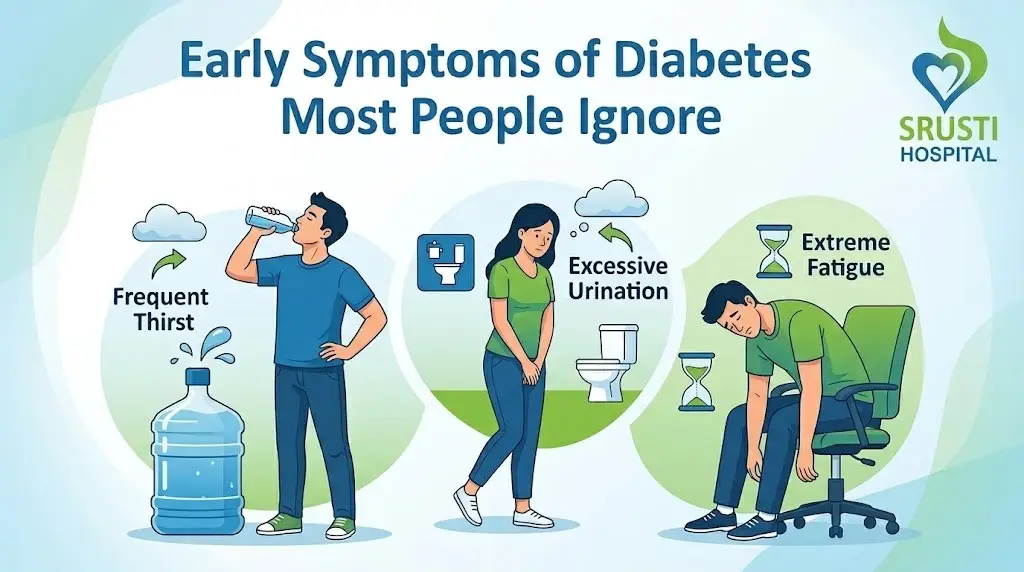
Early Symptoms of Diabetes Most People Ignore
Diabetes often develops slowly. In the early stages, many symptoms may appear mild or harmless. Because of this, people frequently ignore the warning signs until blood sugar levels become difficult to control.
When diabetes remains untreated for a long time, it can affect the eyes, kidneys, nerves, heart, and overall health. Therefore, recognizing the early symptoms is very important.
Frequent Urination
One of the most common early signs of diabetes is frequent urination, especially during the night.
When blood sugar levels rise, the kidneys work harder to remove excess sugar from the body through urine. As a result, people may notice:
- Passing urine more often than usual
- Waking up multiple times at night to urinate
- Increased urine quantity
Because the body loses more fluids, dehydration may also develop.
Increased Thirst
Frequent urination can lead to excessive thirst. Even after drinking water, the mouth may continue to feel dry.
People with high blood sugar often experience:
- Constant thirst
- Dry mouth
- A feeling of dehydration
In many cases, this symptom develops gradually and may go unnoticed at first.
Unexplained Fatigue
Fatigue is another symptom many people ignore. Although tiredness can happen due to stress or lack of sleep, diabetes-related fatigue often feels persistent.
This happens because the body cannot properly use glucose for energy.
As a result, people may experience:
- Low energy throughout the day
- Difficulty concentrating
- Weakness even after resting
Over time, this can affect daily activities and productivity.
Increased Hunger
Even after eating meals regularly, some people may still feel unusually hungry.
When glucose cannot enter the body’s cells properly, the brain continues to signal hunger. Consequently, people may:
- Feel hungry shortly after meals
- Crave sugary foods
- Eat more frequently than before
This symptom may occur alongside weight changes.
Sudden Weight Loss
Unexpected weight loss can sometimes be an early sign of diabetes, particularly in uncontrolled cases.
Since the body cannot use sugar efficiently, it may start breaking down fat and muscle for energy.
Because of this, some people notice:
- Loose-fitting clothes
- Reduced body weight without dieting
- Muscle weakness
Sudden unexplained weight loss should always be medically evaluated.
Blurred Vision
High blood sugar can affect the tiny blood vessels in the eyes. As a result, vision may temporarily become blurry.
People may experience:
- Difficulty focusing
- Blurred or fluctuating vision
- Eye strain or headaches
In addition, uncontrolled diabetes can eventually damage the eyes permanently if left untreated.

Slow Healing of Wounds
Cuts, bruises, or infections that take longer to heal may also indicate diabetes.
High sugar levels can affect blood circulation and reduce the body’s ability to fight infection.
Common signs include:
- Wounds healing slowly
- Frequent skin infections
- Repeated gum problems
Therefore, delayed healing should not be ignored.
Tingling or Numbness in Hands and Feet
Diabetes can affect the nerves, especially in the hands and feet.
In the early stages, people may notice:
- Tingling sensations
- Burning feelings in the feet
- Numbness in fingers or toes
These symptoms may become worse if blood sugar remains uncontrolled.
Frequent Infections
High blood sugar can weaken the immune system. Because of this, some individuals develop infections more often.
These may include:
- Skin infections
- Urinary tract infections
- Fungal infections
- Recurrent gum infections
Frequent infections may sometimes be one of the earliest warning signs.
Why Early Diagnosis Matters
Early detection of diabetes can help prevent serious complications.
With proper treatment and lifestyle changes, blood sugar levels can often be managed effectively. In addition, early management reduces the risk of damage to important organs.
Healthy habits that help control diabetes include:
- Eating a balanced diet
- Exercising regularly
- Maintaining healthy body weight
- Reducing sugar intake
- Monitoring blood sugar levels regularly
When to Consult a Doctor
You should seek medical advice if you experience:
- Frequent urination and excessive thirst
- Constant fatigue
- Sudden weight changes
- Blurred vision
- Tingling in hands or feet
- Slow-healing wounds
Early medical evaluation can help identify diabetes before complications develop.
Book Your Consultation
If you are experiencing symptoms related to diabetes, early diagnosis and proper care are essential. Timely treatment can help manage blood sugar levels and protect your long-term health. Book a consultation today for expert medical guidance.
📍 Address: Plot No. 9, Kathagola, Ring Rd, Mangalabag, Cuttack, Odisha 753001
📞 Call: +91 73810 62525
☎️ Landline: 0671-2319600
📧 Email: info@srustihospital.com
🌐 Website: srustihospital.com
Taking care of your health today can help prevent serious complications in the future. Early diagnosis, proper treatment, and regular monitoring play an important role in living a healthier and more active life.
