

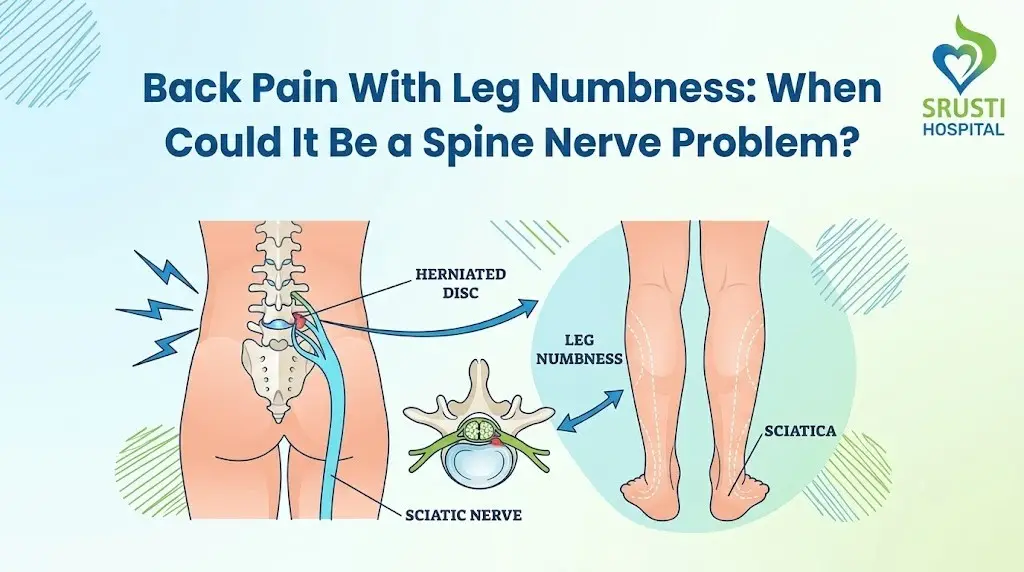
Back pain is a common problem and can occur after lifting, prolonged sitting, muscle strain, or other everyday activities. However, when back pain is accompanied by numbness, tingling, or weakness in the leg, it may sometimes indicate irritation or compression of a nerve in the lower spine.
One common example is sciatica, which occurs when the sciatic nerve or one of its nerve roots is irritated or compressed. A herniated disc is one possible cause, although other changes in the spine can also affect the nerves.
Most cases of back pain with leg symptoms are not emergencies. However, certain warning signs require urgent medical attention. Therefore, understanding when leg numbness may be related to a spine nerve problem can help people seek the right care at the right time.
What Does Leg Numbness With Back Pain Mean?
Leg numbness means reduced or altered sensation in part of the leg. It may feel like the area is asleep, heavy, tingling, or less sensitive than usual.
When numbness occurs together with lower back pain, it may be related to irritation or compression of a nerve leaving the spine.
A person may experience:
- Numbness in the buttock or leg
- Pins and needles
- Burning or shooting pain
- Pain travelling from the lower back into the leg
- Weakness in the leg or foot
- Difficulty walking normally
These symptoms can occur with sciatica or other forms of nerve-root irritation.
What Is Sciatica?
Sciatica describes symptoms caused by irritation or compression of the sciatic nerve or its nerve roots.
The sciatic nerve travels from the lower back through the buttocks and down the leg. Therefore, irritation in the lower spine can cause symptoms farther down the leg.
Common symptoms include:
- Sharp or burning leg pain
- Tingling
- Numbness
- Muscle weakness
- Pain in the buttock
- Pain that travels down the leg
The symptoms often affect one side, although serious conditions can cause symptoms in both legs.
How Can a Spine Problem Cause Leg Numbness?
The lower spine contains nerves that carry signals between the brain, spinal cord, and lower limbs.
If a nerve root becomes irritated or compressed, normal nerve signalling may be affected. As a result, a person may experience pain, tingling, numbness, or weakness along the area supplied by that nerve.
A herniated disc can sometimes press against a nerve root. Similarly, age-related changes in the spine can reduce the space available for nerves and cause irritation.
Common Causes of Back Pain With Leg Numbness
Several conditions can cause back pain together with numbness or other leg symptoms.
Common causes include:
- Herniated or bulging disc
- Sciatica
- Nerve-root irritation
- Spinal stenosis
- Age-related changes in the spine
- Spinal injuries
- Certain inflammatory conditions
- Less commonly, infections or other serious spinal conditions
The exact cause cannot be determined from symptoms alone. Therefore, a medical examination may be necessary, especially when numbness is persistent, worsening, or associated with weakness.
What Is a Herniated Disc?
The discs between the vertebrae act as cushions and help the spine move.
Sometimes, part of a disc can bulge or herniate and irritate a nearby nerve. When this happens in the lower back, the resulting nerve irritation can cause pain, tingling, numbness, or weakness in the leg.
However, not every disc problem causes symptoms. Some people may have disc changes without experiencing pain or nerve problems.
Therefore, scan findings should always be interpreted together with symptoms and clinical examination.
What Does Nerve Pain in the Leg Feel Like?
Nerve-related symptoms may feel different from ordinary muscle pain.
You may notice:
- Sharp or shooting pain
- Burning sensation
- Electric-shock-like pain
- Pins and needles
- Numbness
- Weakness
- Pain that travels from the back or buttock into the leg
The pain may become worse with certain movements, coughing, sneezing, or straining in some people.
Can Leg Numbness Occur Without Severe Back Pain?
Yes.
A person may have significant leg symptoms even when back pain is mild. In some cases, pain in the leg may be more noticeable than pain in the lower back.
Therefore, the absence of severe back pain does not automatically rule out a nerve-related problem.
Persistent numbness, tingling, or weakness should be assessed if it does not improve or interferes with normal activities.
When Is Leg Numbness a Warning Sign?
Leg numbness deserves greater attention when it is:
- Getting worse over time
- Associated with muscle weakness
- Affecting walking or balance
- Present in both legs
- Associated with significant or worsening pain
- Accompanied by bladder or bowel changes
- Associated with numbness around the genitals or buttocks
These symptoms can indicate more significant nerve compression and should not be ignored.
Can Back Pain With Leg Numbness Be Serious?
Most cases of sciatica are not emergencies and may improve with appropriate conservative treatment. However, a small number of people with back pain and neurological symptoms can have a serious underlying condition.
For example, severe compression of the nerves at the bottom of the spinal canal can cause cauda equina syndrome.
This condition is rare but potentially serious and requires urgent medical assessment.
What Is Cauda Equina Syndrome?
Cauda equina syndrome occurs when the bundle of nerves at the lower end of the spinal canal becomes significantly compressed.
These nerves are involved in sensation and movement of the legs and also control important bladder, bowel, and sexual functions.
Because prolonged nerve compression can result in permanent problems, suspected cauda equina syndrome requires urgent evaluation.

Emergency Symptoms That Should Never Be Ignored
Seek emergency medical attention if back pain with leg symptoms is accompanied by:
- New difficulty starting urination
- Inability to urinate
- Loss of bladder control
- Loss of bowel control
- Numbness around the genitals
- Numbness around the anus or buttocks
- Numbness between the inner thighs
- Severe or worsening weakness in both legs
- Significant numbness or weakness affecting both legs
These symptoms can be warning signs of cauda equina syndrome or another serious spinal condition.
When Should You See a Spine Specialist?
You should consider medical evaluation if:
- Leg numbness continues or keeps returning
- Back pain is affecting daily activities
- Pain travels down the leg
- You develop pins and needles
- You notice weakness in the leg or foot
- Symptoms are becoming worse
- You have difficulty walking normally
A doctor can assess your symptoms and determine whether further investigation or specialist care is necessary.
How Is a Spine Nerve Problem Diagnosed?
Diagnosis usually begins with a medical history and physical examination.
Your doctor may assess:
- Where the pain is located
- The distribution of numbness
- Muscle strength
- Reflexes
- Sensation
- Walking pattern
- Spinal movement
- Signs of nerve irritation
Depending on the symptoms and examination, additional investigations may be recommended.
Is an MRI Always Needed?
Not everyone with back pain or sciatica needs an MRI.
Imaging is generally considered when the results are likely to change treatment or when there are concerning symptoms requiring further evaluation. NICE guidance advises against routine imaging for low back pain with or without sciatica in non-specialist settings.
If a serious nerve problem is suspected, however, appropriate imaging may be arranged as part of specialist assessment.
Treatment for Back Pain With Leg Numbness
Treatment depends on the underlying cause and the severity of symptoms.
Depending on the condition, treatment may include:
- Activity modification
- Appropriate pain management
- Physiotherapy
- Exercise-based rehabilitation
- Medicines prescribed by a doctor
- Specialist procedures in selected cases
- Surgery when medically indicated
Most people with sciatica do not require surgery. However, treatment should be personalised according to the cause and severity of the nerve problem.
Can Physiotherapy Help?
Physiotherapy may be useful for many people with back pain and sciatica.
A physiotherapist may recommend suitable exercises and movement strategies based on the individual’s condition.
The aim may be to:
- Improve mobility
- Strengthen supporting muscles
- Improve physical function
- Reduce pain
- Help return to normal activities
However, exercises should be selected according to the person’s symptoms and medical condition. Severe or progressive neurological symptoms require medical assessment rather than self-directed exercise alone.
Is Surgery Always Required?
No.
Many people with sciatica or nerve irritation improve without surgery. Conservative treatment may be appropriate when symptoms are stable and there are no signs of serious neurological compromise.
However, surgery may be considered when symptoms remain severe despite appropriate treatment, when a specific structural problem is identified, or when there is significant or progressive neurological impairment.
If cauda equina syndrome or another serious compression is suspected, urgent specialist treatment may be necessary.
What Can You Do to Protect Your Spine?
Healthy movement habits can support overall spinal health.
Helpful measures include:
- Staying physically active
- Maintaining a healthy body weight
- Using proper lifting techniques
- Avoiding prolonged periods in one position
- Building core and supporting muscle strength
- Following an appropriate exercise programme
- Taking breaks during long periods of sitting
However, these measures cannot prevent every spinal condition.
Should You Stay in Bed With Back Pain?
Prolonged bed rest is generally not recommended for ordinary back pain or sciatica.
When medically appropriate, staying gently active and gradually returning to normal activities can support recovery.
However, people with severe symptoms, significant weakness, recent injury, or warning signs should seek medical advice rather than attempting to manage the problem alone.
What Should You Avoid?
When back pain is accompanied by leg numbness, avoid:
- Ignoring worsening numbness
- Continuing strenuous activity despite increasing symptoms
- Lifting heavy objects without proper technique
- Staying in bed for prolonged periods without medical advice
- Taking medicines without appropriate guidance
- Delaying evaluation when weakness develops
Most importantly, do not ignore bladder, bowel, or saddle-area sensory changes.
When Should You Consult a Doctor?
Consult a doctor or spine specialist if back pain is accompanied by persistent leg numbness, tingling, shooting pain, or weakness.
Prompt evaluation is particularly important if symptoms are getting worse or affecting your ability to walk, work, or perform everyday activities.
If you develop new bladder or bowel problems, numbness around the genitals or anus, or severe or progressive weakness in both legs, seek emergency medical care immediately.
Living With Back Pain and Nerve Symptoms
Many people with back pain and nerve-related leg symptoms improve with appropriate treatment, physical activity, and rehabilitation.
The most important step is understanding the cause rather than treating every type of back pain in the same way.
If numbness, tingling, or weakness continues, a proper medical assessment can help identify whether a spinal nerve is involved and guide the right treatment.
Book Your Consultation
Back pain with leg numbness can sometimes be caused by a compressed or irritated spinal nerve. While many cases improve with appropriate non-surgical care, persistent or worsening numbness and weakness should not be ignored.
If you are experiencing back pain that travels into the leg, persistent numbness, tingling, or weakness, consult a spine or orthopaedic specialist for proper evaluation.
At Srushti Hospital, Cuttack, patients can receive evaluation and specialist care for back pain, spine conditions, nerve-related symptoms, and other musculoskeletal problems.
Address: Plot No. 9, Kathagola, Ring Rd, Mangalabag, Cuttack, Odisha 753001
Call: +91 73810 62525
Landline: 0671-2319600
Email: info@srustihospital.com
Website: srustihospital.com
If back pain is accompanied by sudden or worsening weakness, numbness in both legs, loss of bladder or bowel control, or numbness around the genitals or anus, seek emergency medical care immediately.
