

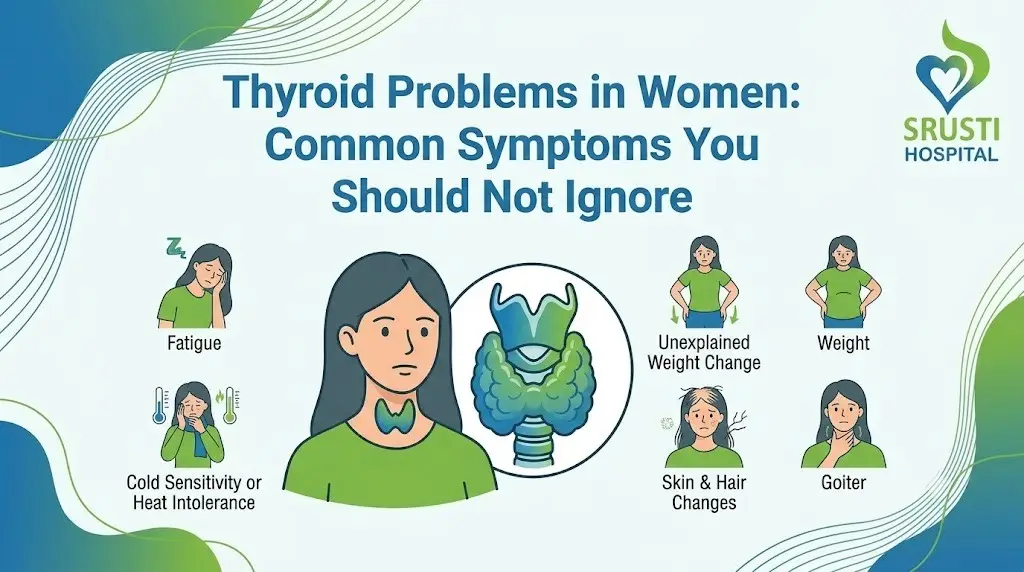
Thyroid problems women experience are more common than many people realize and can affect metabolism, energy levels, mood, and overall well-being. Recognizing thyroid symptoms women may notice, along with common thyroid disorder signs, is essential for early diagnosis and treatment. Understanding women’s thyroid health and identifying thyroid disease symptoms can help prevent complications and support better long-term health.
Thyroid problems women experience can affect physical, emotional, and reproductive health at any age. Early recognition of thyroid problems women is essential because untreated thyroid conditions may lead to long-term health complications. Common thyroid symptoms women notice include unexplained weight changes, persistent fatigue, mood swings, hair thinning, irregular menstrual cycles, and difficulty concentrating. These thyroid disorder signs are often mistaken for stress or hormonal changes, causing delays in diagnosis. Paying attention to women’s thyroid health through regular medical check-ups and timely blood tests can help identify thyroid disease symptoms before they become severe. Understanding thyroid problems women face allows individuals to seek treatment early, manage symptoms effectively, and maintain better overall health. Healthcare professionals recommend monitoring thyroid problems women carefully, especially during pregnancy, menopause, or when there is a family history of thyroid disorders.
Maintaining women’s thyroid health requires a balanced lifestyle, nutritious diet, and regular medical evaluations when symptoms appear. Persistent thyroid problems women should never be ignored because untreated thyroid conditions can affect metabolism, heart health, fertility, and energy levels. Recognizing thyroid symptoms women early and discussing thyroid disorder signs with a healthcare provider can lead to accurate diagnosis and appropriate treatment. Regular monitoring can also reduce the impact of thyroid disease symptoms and improve long-term quality of life. By understanding thyroid problems women, making healthy lifestyle choices, and following medical advice, many women can successfully manage thyroid conditions. Staying informed about thyroid problems women empowers individuals to take proactive steps toward better women’s thyroid health while reducing the risk of complications associated with untreated thyroid disorders.
Regular screening for thyroid problems women is especially important for those with a family history of thyroid disorders or autoimmune conditions. Identifying thyroid symptoms women early and recognizing thyroid disorder signs can help prevent complications. Protecting women’s thyroid health through timely diagnosis and treatment also helps reduce the severity of thyroid disease symptoms and supports overall well-being.
Managing thyroid problems women often involves medication, regular follow-up appointments, and healthy lifestyle habits. Understanding thyroid disease symptoms, monitoring thyroid symptoms women, and paying attention to thyroid disorder signs can improve treatment outcomes. Prioritizing women’s thyroid health allows women to maintain balanced hormone levels, better energy, and a healthier quality of life.
Maintaining Thyroid Problems Women Health is essential for overall well-being and hormonal balance. Prioritizing Women’s Thyroid Health through regular health check-ups, a balanced diet, and an active lifestyle can help detect thyroid issues early. Good Women’s Thyroid Health supports healthy metabolism, energy levels, and reproductive health. Regular monitoring and timely treatment contribute to better Women’s Thyroid Health, while awareness and preventive care strengthen Women’s Thyroid Health over time. Investing in Women’s Thyroid Health today can help reduce the risk of future thyroid-related complications and improve long-term quality of life.
Thyroid problems are common health conditions that can affect women at different stages of life. The thyroid gland plays an important role in controlling metabolism and influences many functions throughout the body.
However, thyroid symptoms can often be mistaken for stress, tiredness, hormonal changes, or changes in lifestyle. As a result, many women may ignore early warning signs.
Understanding the common symptoms of thyroid problems can help women seek timely medical care and receive appropriate treatment.
What Is the Thyroid Gland?
The thyroid is a small, butterfly-shaped gland located at the front of the neck.
It produces thyroid hormones that help control how the body uses energy. Therefore, thyroid hormones can affect several important body functions.
These include:
- Heart rate
- Body temperature
- Metabolism
- Digestion
- Body weight
- Mood
- Energy levels
When the thyroid produces too much or too little hormone, several symptoms may develop.
Why Are Thyroid Problems Common in Women?
Women are more likely than men to develop thyroid disease. In addition, thyroid problems may occur during periods of hormonal change.
Certain thyroid conditions may be more likely around:
- Pregnancy
- After childbirth
- Menopause
- Other periods of hormonal change
Autoimmune diseases can also affect the thyroid gland. Hashimoto’s disease, for example, can cause an underactive thyroid. Meanwhile, Graves’ disease is a common cause of an overactive thyroid.
Therefore, women should pay attention to persistent changes in their energy, weight, menstrual cycle, and overall health.
Common Types of Thyroid Problems
Thyroid disorders can affect hormone production in different ways.
The two common conditions are:
Hypothyroidism
Hypothyroidism occurs when the thyroid gland does not produce enough thyroid hormones. As a result, many body functions may slow down.
Hyperthyroidism
Hyperthyroidism occurs when the thyroid gland produces more thyroid hormones than the body needs. Consequently, several body functions may speed up.
The symptoms of these conditions can be different. Therefore, proper testing is necessary for an accurate diagnosis.
Constant Tiredness and Low Energy
Feeling tired after a busy day is normal. However, persistent tiredness that does not improve with adequate rest may require medical attention.
Women with an underactive thyroid may experience:
- Constant fatigue
- Low energy
- Weakness
- Difficulty completing daily activities
- Increased need for rest
Because fatigue can occur due to many health conditions, thyroid testing may be recommended when symptoms continue.
Unexplained Weight Gain or Weight Loss
Unexpected changes in body weight can sometimes be linked to thyroid problems.
An underactive thyroid may contribute to weight gain. On the other hand, an overactive thyroid may cause weight loss despite a normal or increased appetite.
Women should consult a doctor if they experience:
- Unexplained weight gain
- Sudden weight loss
- Difficulty managing body weight
- Significant weight changes without major lifestyle changes
However, body weight alone cannot confirm a thyroid condition. Blood tests are necessary for proper diagnosis.
Irregular or Heavy Menstrual Periods
The thyroid can influence the menstrual cycle. Therefore, thyroid problems may sometimes cause changes in periods.
Women may experience:
- Heavy menstrual bleeding
- Irregular periods
- Changes in menstrual flow
- Changes in the timing of periods
In some cases, thyroid disorders may also be associated with fertility problems.
Persistent menstrual changes should not be ignored, especially when they occur with fatigue, weight changes, or other symptoms.
Hair Loss and Changes in Hair Texture
Hair changes can occur for many reasons. However, thyroid problems may contribute to dry, thinning hair or hair loss.
Possible changes include:
- Increased hair fall
- Thinning hair
- Dry hair
- Changes in hair texture
Because nutritional deficiencies, stress, and hormonal conditions can also cause hair loss, medical evaluation can help identify the underlying cause.
Dry Skin and Changes in Body Temperature
Women with thyroid problems may notice changes in their skin or sensitivity to temperature.
An underactive thyroid may cause:
- Dry skin
- Feeling unusually cold
- Difficulty tolerating cold temperatures
In contrast, an overactive thyroid may cause:
- Increased sweating
- Feeling unusually hot
- Difficulty tolerating warm temperatures
Persistent temperature sensitivity may be an important symptom when combined with other thyroid-related signs.
Mood Changes and Difficulty Concentrating
Thyroid hormones can affect mood and mental well-being.
Some women may experience:
- Low mood
- Difficulty concentrating
- Problems thinking clearly
- Irritability
- Anxiety
- Mood swings
For example, hypothyroidism may be associated with low mood and difficulty concentrating. Meanwhile, hyperthyroidism may cause nervousness, anxiety, or irritability.
Therefore, unexplained and persistent mood changes may require a medical evaluation.

Fast or Slow Heart Rate
Thyroid hormones influence heart function. As a result, abnormal thyroid hormone levels may affect heart rate.
An overactive thyroid may cause:
- Rapid heartbeat
- Irregular heartbeat
- Heart palpitations
Meanwhile, an underactive thyroid may sometimes cause a slower heart rate.
Women who experience persistent palpitations or significant changes in heart rate should seek medical advice.
Neck Swelling or an Enlarged Thyroid
A visible swelling at the front of the neck may be caused by an enlarged thyroid gland, also known as a goitre.
Possible signs include:
- Swelling at the front of the neck
- A noticeable lump or enlargement
- Discomfort in the neck
- Difficulty swallowing in some cases
A neck swelling should be medically evaluated to determine its cause.
Muscle Weakness and Body Pain
Thyroid problems may also affect muscles and joints.
Some women may experience:
- Muscle weakness
- Muscle pain
- Joint pain
- General body discomfort
- Reduced physical strength
These symptoms can develop gradually. Therefore, they may sometimes be mistaken for tiredness or physical strain.
Changes in Bowel Habits
The thyroid gland influences metabolism and digestion. Consequently, thyroid problems may cause changes in bowel movements.
An underactive thyroid may be associated with constipation.
In contrast, an overactive thyroid may cause more frequent bowel movements or diarrhoea.
Persistent digestive changes should be discussed with a healthcare provider, particularly when other thyroid symptoms are present.
Sleep Problems
Changes in thyroid hormone levels may affect sleep.
Women with an overactive thyroid may experience:
- Difficulty sleeping
- Restlessness
- Nervous energy
- Frequent sleep disturbances
Meanwhile, women with an underactive thyroid may feel excessively tired or sleepy.
Therefore, ongoing sleep problems combined with weight, mood, or energy changes may require further investigation.
Thyroid Problems During Pregnancy and After Childbirth
Thyroid health is especially important during pregnancy.
Some women may develop thyroid problems during pregnancy or after childbirth. Postpartum thyroiditis, for example, can affect thyroid function after pregnancy.
Symptoms may include:
- Tiredness
- Irritability
- Heat intolerance
- Sleep problems
- Fast heartbeat
Because some symptoms may be confused with normal changes after childbirth, proper medical evaluation is important.
Who Is at Higher Risk of Thyroid Problems?
Certain women may have a greater risk of developing thyroid disease.
Risk factors may include:
- Family history of thyroid disease
- Previous thyroid problems
- Autoimmune diseases
- Pregnancy or recent childbirth
- Increasing age
- Certain medications or medical treatments
Women with risk factors should discuss thyroid testing with their healthcare provider when appropriate.
How Are Thyroid Problems Diagnosed?
Doctors diagnose thyroid problems using symptoms, medical history, physical examination, and blood tests.
Common thyroid tests may include:
- Thyroid-stimulating hormone or TSH test
- T4 test
- T3 test when required
- Thyroid antibody tests in selected cases
Additional imaging tests may also be recommended depending on the symptoms and suspected thyroid condition.
Blood tests help doctors understand how well the thyroid gland is functioning.
Treatment Options for Thyroid Problems
Treatment depends on the type and cause of the thyroid disorder.
For hypothyroidism, doctors commonly use thyroid hormone replacement medicine.
Treatment for hyperthyroidism may include:
- Antithyroid medicines
- Radioactive iodine treatment in selected patients
- Surgery in certain cases
- Medicines to manage specific symptoms
Therefore, treatment should be personalised according to the patient’s condition and medical history.
Importance of Regular Thyroid Monitoring
Women diagnosed with thyroid disease may require regular blood tests.
Monitoring helps doctors:
- Check thyroid hormone levels
- Evaluate treatment response
- Adjust medicine doses when necessary
- Identify changes in thyroid function
Patients should take prescribed thyroid medicines as directed and attend recommended follow-up appointments.
Can Thyroid Problems Be Managed?
Yes, many thyroid conditions can be effectively managed with appropriate medical care.
Helpful steps include:
- Taking prescribed medicines regularly
- Attending follow-up appointments
- Completing recommended blood tests
- Maintaining a balanced diet
- Informing doctors about new symptoms
- Avoiding changes to thyroid medicine without medical advice
Consistent treatment and monitoring can help maintain healthy thyroid hormone levels.
What Symptoms Should Women Not Ignore?
Women should pay attention to persistent changes in their bodies.
Important symptoms include:
- Constant tiredness
- Unexplained weight changes
- Irregular or heavy periods
- Persistent hair loss
- Unusual sensitivity to heat or cold
- Rapid or irregular heartbeat
- Neck swelling
- Persistent mood changes
- Difficulty concentrating
Although these symptoms may have several possible causes, a medical evaluation can help identify the underlying problem.
When Should You Consult a Doctor?
Medical advice should be sought if:
- Symptoms continue for several weeks
- Weight changes occur without explanation
- Menstrual cycles become persistently irregular
- Severe fatigue affects daily activities
- Heart palpitations occur frequently
- Swelling develops in the neck
- Multiple thyroid-related symptoms appear together
Early testing can help identify thyroid problems and guide appropriate treatment.
Book Your Consultation
Thyroid problems can affect energy levels, body weight, menstrual health, mood, and several other body functions. However, early symptoms may often be overlooked or mistaken for everyday stress and hormonal changes.
Address: Plot No. 9, Kathagola, Ring Rd, Mangalabag, Cuttack, Odisha 753001
 Call: +91 73810 62525
 Landline: 0671-2319600
 Email: info@srustihospital.com
 Website: srustihospital.com
By recognising persistent symptoms, undergoing appropriate thyroid testing, and following medical advice, women can manage thyroid conditions effectively and support their overall health.
