
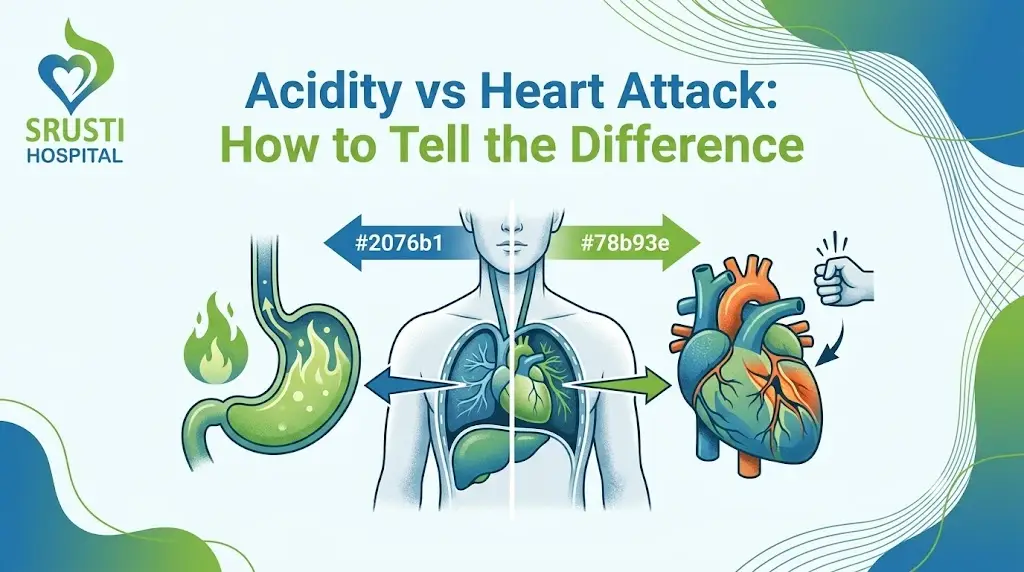
Chest discomfort can be confusing. A burning sensation after a meal may be caused by acidity or acid reflux. However, chest discomfort can also be a symptom of a heart attack.
Because the heart and oesophagus are located close to each other, the symptoms can sometimes feel surprisingly similar. In fact, a heart attack may occasionally cause symptoms that feel like indigestion or heartburn. Therefore, it is important not to assume that chest discomfort is “just acidity” when the cause is uncertain.
The safest rule is simple: if you are unsure whether chest symptoms are caused by acidity or a heart problem, seek urgent medical help rather than trying to diagnose yourself at home.
What Is Acidity?
Acidity commonly refers to symptoms caused by acid reflux, indigestion, or irritation of the upper digestive tract.
Acid reflux occurs when stomach contents move back into the oesophagus, the tube that carries food from the mouth to the stomach.
This can cause symptoms such as:
- A burning sensation in the chest
- Burning in the throat
- A sour or bitter taste in the mouth
- Burping
- Bloating
- Feeling overly full
- Discomfort after eating
- Symptoms that may worsen when lying down
Although acidity can cause uncomfortable chest symptoms, chest pain should not automatically be assumed to be digestive in origin.
What Is a Heart Attack?
A heart attack occurs when blood flow to part of the heart muscle is suddenly reduced or blocked. Without enough oxygen-rich blood, the heart muscle can become damaged.
A heart attack is a medical emergency and requires immediate treatment.
Common symptoms can include chest pressure or discomfort, pain spreading to other parts of the upper body, shortness of breath, nausea, sweating, fatigue, or light-headedness. Symptoms can vary from person to person and may sometimes be mild or unusual.
Why Can Acidity and a Heart Attack Feel Similar?
The symptoms can overlap because both conditions may cause discomfort in the chest or upper abdomen.
For example, both may sometimes involve:
- Burning or discomfort in the chest
- Upper abdominal discomfort
- Nausea
- A feeling of indigestion
However, similar symptoms do not mean that the conditions are the same.
A person cannot always reliably distinguish acidity from a heart attack based on symptoms alone. Medical tests such as an ECG and blood tests may be needed when a heart attack is suspected.
What Does Acidity Usually Feel Like?
Acidity or heartburn often causes a burning sensation behind the breastbone.
The symptoms may be more likely to occur:
- After eating
- After eating a large or heavy meal
- When lying down
- When bending over
- Along with a sour or bitter taste in the mouth
- Along with burping, bloating, or regurgitation
These features may suggest a digestive cause. However, they cannot completely rule out a heart problem, particularly if the symptoms are new, severe, persistent, or accompanied by other warning signs.
What Does a Heart Attack Usually Feel Like?
A heart attack may cause:
- Pressure in the chest
- Tightness or squeezing
- Heaviness
- Fullness
- Pain or discomfort in the centre of the chest
- Burning that may resemble indigestion
The discomfort may last for several minutes, disappear and return, or gradually become worse.
Importantly, a heart attack does not always cause dramatic or severe chest pain. Some people may experience relatively mild symptoms or symptoms that are mistaken for indigestion.
Can Heart Attack Pain Spread to Other Parts of the Body?
Yes. Pain or discomfort from a heart attack may spread beyond the chest.
It can affect the:
- Left or right arm
- Both arms
- Shoulders
- Back
- Neck
- Jaw
- Upper abdomen or stomach area
Therefore, chest discomfort accompanied by pain spreading to these areas should be taken seriously, especially if other symptoms are also present.
Does Acidity Cause Shortness of Breath?
Acidity can sometimes cause a sensation of discomfort in the chest or throat. However, significant or unexplained shortness of breath, particularly when combined with chest discomfort, sweating, dizziness, or weakness, should not be assumed to be acidity.
Shortness of breath is one of the symptoms that can occur during a heart attack or other serious medical conditions.
Therefore, sudden chest symptoms with breathing difficulty require urgent medical assessment.
Can Sweating Indicate a Heart Attack?
Sweating, particularly cold or unusual sweating together with chest discomfort, can be a warning sign of a heart attack.
Other concerning symptoms may include:
- Shortness of breath
- Nausea or vomiting
- Dizziness or light-headedness
- Unusual weakness
- Fainting
- Pain spreading to the arm, jaw, neck, or back
Acidity by itself is less likely to explain a combination of these symptoms. Therefore, urgent medical help is important when they occur together.
Can Nausea or Indigestion Be a Sign of a Heart Attack?
Yes. This is one reason why a heart attack can sometimes be mistaken for acidity.
A heart attack may cause:
- Nausea
- Vomiting
- Upset stomach
- Indigestion-like discomfort
- A burning sensation
- Upper abdominal discomfort
Therefore, indigestion-like symptoms should be assessed carefully when they are unusual, severe, persistent, or accompanied by chest pressure, breathlessness, sweating, or pain spreading to other areas.
Are Heart Attack Symptoms Different in Women?
Heart attack symptoms can vary in everyone. However, some women may experience symptoms that are less obviously recognised as heart-related.
These may include:
- Shortness of breath
- Nausea or upset stomach
- Unusual tiredness or weakness
- Back pain
- Shoulder pain
- Jaw discomfort
- Anxiety
Chest pain or discomfort remains an important symptom. However, the absence of classic severe chest pain does not rule out a heart attack.
Can a Heart Attack Happen Without Severe Chest Pain?
Yes.
Some heart attacks can cause mild, unusual, or less noticeable symptoms. In some cases, people may experience fatigue, indigestion-like symptoms, back discomfort, jaw discomfort, or nausea instead of severe chest pain.
This can make the condition harder to recognise.
Therefore, new and unexplained symptoms, especially in people with cardiovascular risk factors, should not be ignored.
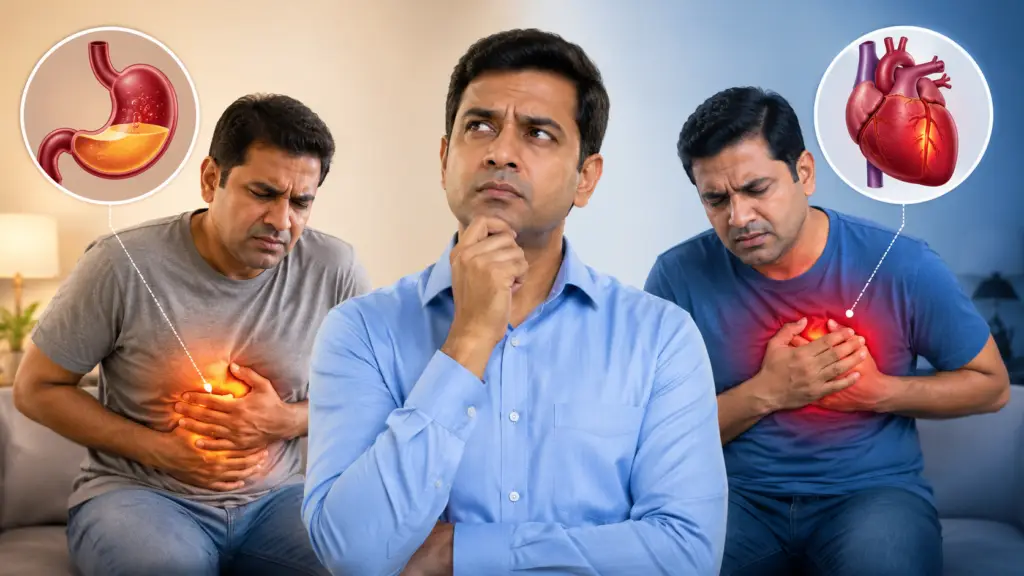
Acidity vs Heart Attack: A Quick Comparison
| Feature | Acidity or Acid Reflux | Possible Heart Attack |
|---|---|---|
| Chest sensation | Often burning | Pressure, squeezing, heaviness, pain, or sometimes burning |
| Timing | May occur after meals | Can occur during activity or at rest |
| Sour taste | May be present | Usually not typical |
| Burping or bloating | May occur | Not a typical defining feature |
| Pain spreading to arm or jaw | Less typical | Can occur |
| Shortness of breath | Not a typical warning sign of simple acidity | Can occur |
| Cold sweating | Less typical | Can occur |
| Dizziness or fainting | Not typical of simple acidity | Can occur |
| Nausea | Can occur | Can also occur |
| Response to antacids | May improve symptoms | Does not reliably rule out a heart attack |
This comparison is only a general guide. Symptoms can overlap, so it should not be used to rule out a heart attack at home.
When Should You Suspect a Heart Attack Instead of Acidity?
Seek emergency medical help if chest discomfort occurs with:
- Pressure, squeezing, or heaviness in the chest
- Pain spreading to the arm, shoulder, back, neck, or jaw
- Shortness of breath
- Cold sweating
- Dizziness or light-headedness
- Fainting
- Unusual weakness
- Severe nausea or vomiting
- Symptoms that are new, severe, or getting worse
Do not wait for symptoms to become unbearable. A heart attack can begin with mild discomfort and gradually worsen.
What Should You Do If You Are Not Sure?
If you cannot confidently tell whether your symptoms are acidity or a heart problem, it is safer to seek urgent medical evaluation.
Do not rely only on:
- Antacids
- Home remedies
- Rest
- Previous experiences with acidity
- The assumption that you are too young to have a heart problem
A heart attack can sometimes feel similar to indigestion, and only proper medical assessment can identify the cause with certainty.
Should You Drive Yourself to the Hospital?
If a heart attack is suspected, calling for emergency medical assistance is generally safer than driving yourself.
A person with a possible heart attack may become increasingly unwell or develop dangerous complications during the journey.
Therefore, arrange emergency medical transport according to the services available in your area and follow the instructions provided by emergency professionals.
Who Is at Higher Risk of a Heart Attack?
Certain factors can increase the risk of heart disease and heart attack.
These include:
- High blood pressure
- Diabetes
- High cholesterol
- Smoking or tobacco use
- Obesity
- Physical inactivity
- A family history of early heart disease
- Previous heart disease
- Increasing age
However, symptoms should still be taken seriously even when a person does not have obvious risk factors.
Can You Prevent Acidity?
Some people may reduce acid reflux symptoms by making lifestyle changes such as:
- Avoiding foods that trigger their symptoms
- Avoiding very large meals
- Avoiding lying down immediately after eating
- Maintaining a healthy weight when appropriate
- Avoiding tobacco use
- Discussing persistent symptoms with a healthcare professional
However, frequent or persistent acidity symptoms may require medical evaluation because several digestive conditions can cause similar symptoms.
Can You Reduce the Risk of a Heart Attack?
While not every heart attack can be prevented, managing cardiovascular risk factors can help reduce risk.
Helpful measures may include:
- Keeping blood pressure under control
- Managing diabetes
- Controlling cholesterol
- Avoiding tobacco
- Staying physically active
- Following a balanced diet
- Taking prescribed medicines as directed
- Attending regular health check-ups
If you have known heart disease or cardiovascular risk factors, follow the treatment plan recommended by your doctor.
When Should Chest Pain Be Treated as an Emergency?
Chest pain should be treated as an emergency when it is sudden, severe, persistent, or accompanied by other concerning symptoms.
Seek immediate medical help if chest discomfort occurs with:
- Shortness of breath
- Sweating
- Nausea or vomiting
- Dizziness or fainting
- Pain spreading to the arms, jaw, neck, or back
- Severe weakness
- Confusion or collapse
Do not try to self-diagnose a possible heart attack as acidity. When in doubt, get checked urgently.
Book Your Consultation
Acidity and heart attack symptoms can sometimes overlap, particularly when chest discomfort feels like burning or indigestion. However, a heart attack is a medical emergency, and it should never be ignored or mistaken for ordinary acidity without proper evaluation.
If you experience persistent or unexplained chest discomfort, medical assessment can help identify the underlying cause. However, if symptoms are sudden or severe, or occur with breathlessness, sweating, dizziness, fainting, or pain spreading to the arm, jaw, neck, or back, seek emergency medical help immediately.
At Srushti Hospital, Mangalabag, Cuttack, patients can access comprehensive medical evaluation and multispeciality care for a wide range of health concerns.
Address: Plot No. 9, Kathagola, Ring Rd, Mangalabag, Cuttack, Odisha 753001
Call: +91 73810 62525
Landline: 0671-2319600
Email: info@srustihospital.com
Website: www.srustihospital.com
If you have chest discomfort and are unsure whether it is acidity or a heart-related problem, do not ignore the symptoms. Get medically evaluated promptly.
