

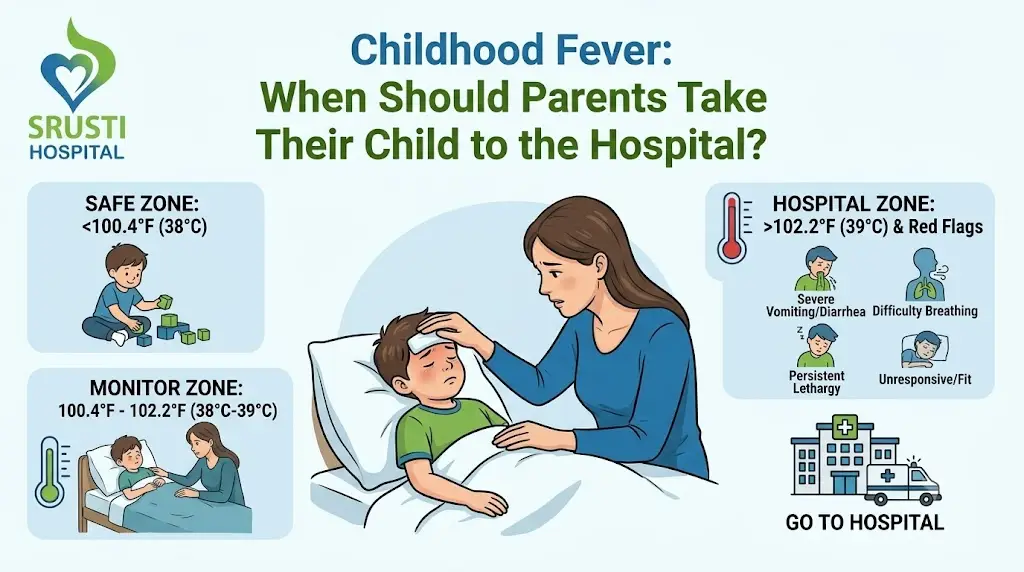
Fever is one of the most common reasons parents worry about their child’s health. In many cases, a fever is the body’s response to an infection and may improve with appropriate care and monitoring. However, a fever can sometimes be associated with a serious illness, especially in very young babies or when other concerning symptoms are present.
Therefore, parents should not judge the seriousness of a fever by temperature alone. A child’s age, behaviour, breathing, hydration, alertness, and accompanying symptoms can all be important.
The key is to know when a child can be monitored at home, when a doctor should be contacted, and when urgent hospital care is needed.
What Is Considered a Fever in Children?
A fever generally means that a child’s body temperature is higher than the normal range.
A temperature of 38°C (100.4°F) or higher is commonly considered a fever when measured accurately. However, the reading can vary depending on the method and site of measurement.
For example, temperatures may be measured using:
- A digital thermometer
- Oral measurement in children old enough to use it correctly
- Underarm measurement
- Ear measurement with an appropriate device
Parents should follow the thermometer manufacturer’s instructions and ask a healthcare professional if they are unsure how to measure their child’s temperature correctly.
Why Do Children Get Fevers?
Fever is a symptom rather than a disease itself.
The most common cause is an infection. A child’s body temperature may rise while the immune system responds to bacteria, viruses, or other causes of illness.
Possible causes include:
- Common viral infections
- Throat or ear infections
- Respiratory infections
- Urinary tract infections
- Gastrointestinal infections
- Certain bacterial infections
- Inflammatory conditions in some cases
However, the cause cannot always be determined from the temperature alone. Therefore, persistent or concerning symptoms should be medically evaluated.
Is a High Fever Always More Dangerous?
Not necessarily.
A high temperature does not always mean that a child has a more serious illness. Similarly, a lower fever does not always mean that the illness is harmless.
A child’s overall condition can be more important than the exact number on the thermometer.
For example, parents should observe whether the child is:
- Alert and responsive
- Breathing comfortably
- Drinking fluids
- Urinating normally
- Able to interact
- Becoming unusually sleepy or difficult to wake
Therefore, changes in behaviour and other symptoms should be considered along with the temperature.
What Are the Common Symptoms That Can Occur With Fever?
Depending on the cause, a child with fever may also experience:
- Tiredness
- Reduced appetite
- Body aches
- Headache
- Cough
- Runny nose
- Sore throat
- Vomiting
- Diarrhoea
- Irritability
Some children may also shiver or complain of feeling cold while their temperature is rising.
However, parents should watch for symptoms that are unusual, severe, or getting worse.
When Should Parents Take a Baby With Fever to the Hospital?
Age is particularly important when a baby has a fever.
For babies younger than 3 months, a temperature of 38°C (100.4°F) or higher requires prompt medical assessment.
Very young babies can become seriously ill without showing many obvious symptoms. Therefore, parents should not wait to see whether the fever improves before seeking medical advice.
For older infants and children, the urgency depends on the child’s overall condition, temperature, duration of fever, and accompanying symptoms.
When Should Parents Seek Urgent Medical Help for a Child With Fever?
Seek urgent medical attention if a child with fever has any of the following:
- Difficulty breathing or very fast breathing
- Blue, grey, unusually pale, or blotchy skin
- Severe weakness or extreme drowsiness
- Difficulty waking the child
- Confusion or unusual behaviour
- A seizure or convulsion
- A stiff neck
- A severe or rapidly spreading rash
- Signs of severe dehydration
- Persistent vomiting
- Severe headache
- Severe pain
- A child who appears seriously unwell
These symptoms may indicate a serious illness and require prompt medical evaluation.
How Can You Tell If a Child Is Having Difficulty Breathing?
Breathing difficulty in a child should always be taken seriously.
Warning signs may include:
- Very fast breathing
- Struggling to breathe
- Chest or ribs pulling inward while breathing
- Noisy breathing
- Grunting
- Pauses in breathing
- Blue or grey colour around the lips
If your child is having significant difficulty breathing, seek emergency medical help immediately.
Can a Fever Cause a Seizure in Children?
Some young children may experience a febrile seizure, which is a seizure associated with fever.
During a seizure, a child may:
- Become unresponsive
- Have jerking or shaking movements
- Become stiff
- Roll their eyes
- Have difficulty responding normally
Although febrile seizures are often brief, a child having a seizure requires immediate medical attention.
If a child is having a seizure:
- Place the child on their side in a safe position
- Move harmful objects away
- Do not put anything in the child’s mouth
- Do not try to hold the child down
- Note how long the seizure lasts
- Seek urgent medical help
What Are the Signs of Dehydration in a Child With Fever?
Fever, vomiting, diarrhoea, and poor fluid intake can increase the risk of dehydration.
Signs of dehydration may include:
- Dry mouth or tongue
- No tears when crying
- Reduced urination
- Very dark urine
- Sunken eyes
- Unusual sleepiness
- Weakness
- Poor drinking
In babies, parents may notice fewer wet diapers than usual.
Severe dehydration requires urgent medical care.
How Long Can a Child’s Fever Last?
The duration of fever depends on the underlying cause.
Some viral infections may cause a fever that improves within a few days. However, persistent or recurring fever may require medical evaluation.
Parents should contact a healthcare professional if:
- The fever continues longer than expected
- The child appears to be getting worse
- The fever disappears and then returns
- New symptoms develop
- The child has an underlying medical condition
The child’s age and overall condition should also be considered.
What Should Parents Do at Home When a Child Has a Fever?
If the child is otherwise alert and does not have emergency warning signs, parents can focus on keeping the child comfortable and monitoring their condition.
Helpful steps may include:
- Offering fluids regularly
- Allowing the child to rest
- Dressing the child in comfortable clothing
- Monitoring temperature appropriately
- Watching for changes in behaviour or symptoms
- Following medical advice regarding fever-reducing medicines
Do not force a child to eat if they have a reduced appetite, but encourage adequate fluid intake when possible.
Should You Give Your Child Medicine for Fever?
Medicines such as paracetamol or ibuprofen may be appropriate for some children to improve comfort or reduce fever.
However, the correct medicine and dose depend on the child’s:
- Age
- Weight
- Medical history
- Other medicines being taken
- Presence of certain health conditions
Therefore, parents should follow the dosing instructions provided by a doctor or pharmacist and use an appropriate measuring device.
Do not give aspirin to children unless specifically prescribed by a qualified healthcare professional.
Should Parents Use Cold Water or Ice to Reduce Fever?
Avoid using ice baths or extremely cold water to treat a fever unless specifically advised by a healthcare professional.
Very cold methods can make a child uncomfortable and cause shivering.
Instead, focus on keeping the child comfortably dressed, offering fluids, and following appropriate medical advice.
When Should Parents Call a Doctor for a Child With Fever?
Contact a doctor when:
- A baby younger than 3 months has a temperature of 38°C (100.4°F) or higher
- Fever is persistent or repeatedly returns
- The child is drinking very little
- The child has reduced urination
- The child has persistent vomiting or diarrhoea
- The child develops a rash
- The child has significant pain
- The child’s behaviour is very different from normal
- You are worried about your child’s condition
Parents know their child better than anyone else. Therefore, if a child appears unusually unwell or something does not seem right, it is appropriate to seek medical advice.
Can a Child Have a Fever Without an Infection?
Yes. Although infections are a common cause, fever can occasionally occur due to other medical conditions.
Therefore, a persistent or unexplained fever may require further medical evaluation.
Doctors may consider the child’s:
- Age
- Symptoms
- Duration of fever
- Recent illnesses
- Exposure history
- Vaccination history
- Medical history
Further tests may be recommended when appropriate.
When Is a Fever More Concerning in Children?
A fever deserves more attention when it is accompanied by concerning changes in the child’s overall condition.
For example, seek prompt medical advice when a child:
- Is unusually sleepy
- Is difficult to wake
- Refuses fluids
- Has signs of dehydration
- Is struggling to breathe
- Has persistent severe pain
- Develops a concerning rash
- Has a seizure
- Appears confused
- Is getting worse rather than improving
In short, the child’s overall appearance and behaviour can be just as important as the temperature reading.
What Should Parents Avoid Doing?
When a child has a fever, avoid:
- Giving adult doses of medicines
- Giving medicines without checking the correct dose
- Using aspirin unless medically prescribed
- Overdressing the child
- Using extreme cold treatments
- Ignoring signs of dehydration
- Delaying medical care when emergency symptoms are present
In addition, avoid giving antibiotics without a doctor’s prescription. Antibiotics do not treat viral infections and may be inappropriate for certain illnesses.
Can You Prevent Every Fever in Children?
No. Children commonly develop infections as their immune systems encounter different viruses and bacteria.
However, some steps can help reduce the risk of certain infections:
- Keeping vaccinations up to date
- Encouraging regular handwashing
- Maintaining good hygiene
- Providing adequate nutrition
- Encouraging appropriate sleep
- Keeping children away from people with certain contagious illnesses when possible
These measures cannot prevent every illness, but they can support overall health and reduce the spread of some infections.
What Information Should Parents Give the Doctor?
When taking a child for medical evaluation, it can be helpful to provide information about:
- The child’s age
- The highest recorded temperature
- How the temperature was measured
- When the fever started
- Other symptoms
- Changes in eating or drinking
- Urination
- Vomiting or diarrhoea
- Medicines already given
- Recent illnesses
- Existing medical conditions
This information can help the doctor understand the child’s condition more quickly.
When Is Childhood Fever a Medical Emergency?
Take your child for emergency medical care if fever occurs with severe symptoms such as:
- Severe breathing difficulty
- A seizure
- Loss of consciousness
- Severe dehydration
- A stiff neck
- A rapidly worsening condition
- Blue or grey skin colour
- A child who is difficult to wake
In addition, a baby younger than 3 months with a temperature of 38°C (100.4°F) or higher requires prompt medical assessment.
When in doubt, it is safer to seek professional medical advice rather than waiting for a potentially serious condition to worsen.
Book Your Consultation
Fever is common in children, but parents should pay close attention to the child’s age, overall behaviour, breathing, hydration, and accompanying symptoms. A fever may be part of a minor infection, but it can sometimes indicate a condition that requires prompt medical care.
If your child has persistent fever, is becoming increasingly unwell, is not drinking enough fluids, shows signs of dehydration, has difficulty breathing, develops a seizure, or is difficult to wake, seek medical attention without delay.
At Srushti Hospital, Mangalabag, Cuttack, children can receive medical evaluation for fever and other concerning symptoms, with access to appropriate emergency and multispeciality care when required.
Address: Plot No. 9, Kathagola, Ring Rd, Mangalabag, Cuttack, Odisha 753001
Call: +91 73810 62525
Landline: 0671-2319600
Email: info@srustihospital.com
Website: www.srustihospital.com
If your child has a fever and you are concerned about their condition, book a consultation at Srushti Hospital, Mangalabag, Cuttack, or seek emergency medical care immediately when serious warning signs are present.
