

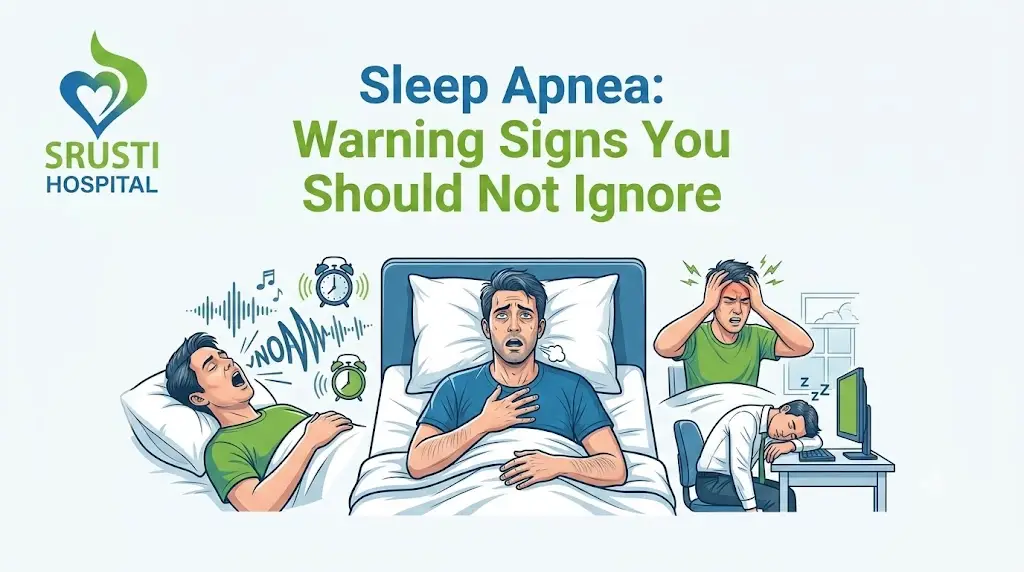
Sleep is essential for physical and mental well-being. However, some people may spend enough time in bed and still wake up feeling tired because their sleep is repeatedly interrupted without them fully realising it. One possible reason is sleep apnea, a condition in which breathing repeatedly stops or becomes significantly reduced during sleep.
These breathing interruptions can affect sleep quality and, over time, may be associated with other health problems. Therefore, persistent snoring, breathing pauses during sleep, excessive daytime sleepiness, or other warning signs should not be ignored.
Recognising the symptoms early can help a person seek appropriate medical evaluation and treatment.
What Is Sleep Apnea?
Sleep apnea is a sleep-related breathing disorder in which breathing repeatedly stops or becomes reduced during sleep.
The main types include:
- Obstructive sleep apnea (OSA): The airway becomes partially or completely blocked during sleep.
- Central sleep apnea (CSA): The brain does not consistently send appropriate signals to the muscles that control breathing.
- Mixed or complex sleep apnea: Features of more than one type of sleep-related breathing problem may be present.
Obstructive sleep apnea is the most common type.
What Happens During Sleep Apnea?
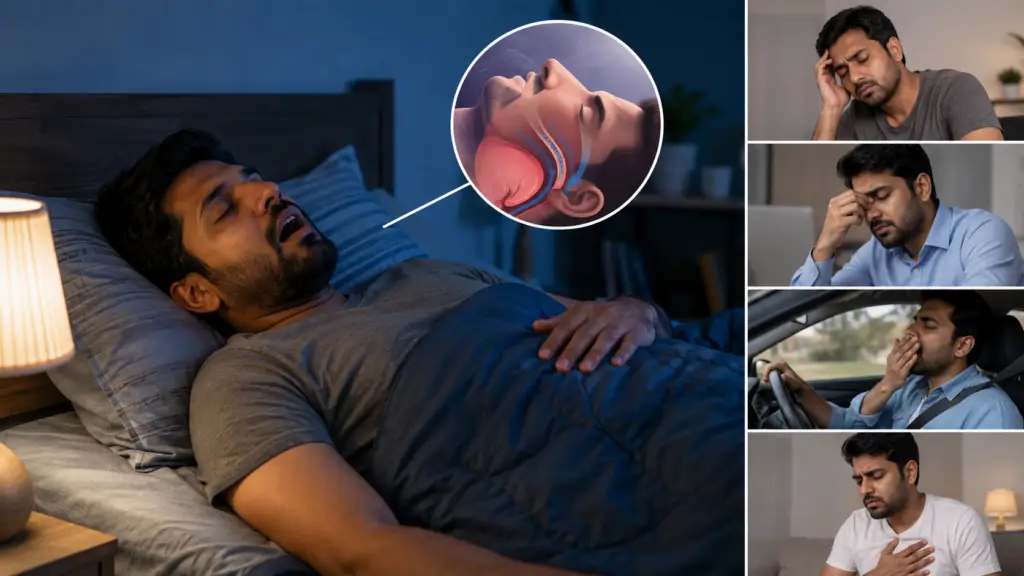
During obstructive sleep apnea, the muscles of the throat relax during sleep, causing the airway to become narrowed or blocked.
As a result:
- Breathing may pause or become shallow
- Oxygen levels may decrease
- The brain briefly reacts to restore normal breathing
- The person may snort, gasp, or choke
- Sleep is repeatedly interrupted
These interruptions may happen without the person fully waking up or remembering them the next morning.
Consequently, a person may sleep for many hours but still experience poor-quality, unrefreshing sleep.
What Are the Most Common Warning Signs of Sleep Apnea?
Sleep apnea symptoms can occur both during the night and during the day.
Common warning signs include:
- Loud, persistent snoring
- Pauses in breathing noticed by another person
- Gasping, choking, or snorting during sleep
- Frequent waking during the night
- Waking with a dry mouth
- Morning headaches
- Feeling unrefreshed after sleep
- Excessive daytime sleepiness
- Difficulty concentrating
- Irritability or mood changes
Not everyone with sleep apnea has every symptom. In addition, not everyone who snores has sleep apnea.
Is Loud Snoring Always a Sign of Sleep Apnea?
No. Snoring alone does not confirm sleep apnea.
However, loud and persistent snoring becomes more concerning when it occurs along with:
- Pauses in breathing
- Gasping or choking during sleep
- Excessive daytime sleepiness
- Morning headaches
- Poor concentration
Therefore, persistent snoring with these symptoms should be discussed with a healthcare professional.
Can Someone Stop Breathing During Sleep Without Knowing It?
Yes. Many people with sleep apnea are unaware that their breathing pauses during sleep.
Often, a partner or family member notices the warning signs first, such as:
- Repeated pauses in breathing
- Loud snoring
- Gasping or choking sounds
- Restless sleep
The person experiencing sleep apnea may only notice daytime symptoms, such as fatigue or difficulty staying awake.
Why Does Sleep Apnea Cause Daytime Sleepiness?
Repeated breathing interruptions can disturb the normal sleep cycle.
Even if a person does not remember waking up, the brain may repeatedly move into lighter stages of sleep to restore breathing.
As a result, deep and restorative sleep may be disrupted.
This can lead to:
- Excessive sleepiness
- Reduced alertness
- Difficulty concentrating
- Reduced work or school performance
- Increased tiredness while driving or operating machinery
Therefore, frequent daytime sleepiness should not simply be dismissed as a lack of motivation or a busy lifestyle.
Can Sleep Apnea Cause Morning Headaches?
Some people with sleep apnea experience headaches after waking.
Morning headaches may occur because of changes in breathing and oxygen or carbon dioxide levels during sleep. However, headaches have many possible causes.
Therefore, frequent morning headaches should be evaluated, particularly when they occur along with snoring, poor sleep, or daytime tiredness.
Who Is at Risk of Sleep Apnea?
Several factors can increase the risk of obstructive sleep apnea.
These may include:
- Excess body weight
- A larger neck circumference
- Enlarged tonsils
- Certain jaw or airway structures
- Increasing age
- Family history
- Alcohol use before bedtime
- Smoking
- Nasal congestion
Sleep apnea can also occur in people who do not have these risk factors.
Therefore, symptoms should be assessed based on the individual’s overall health rather than body weight alone.
Can Children Have Sleep Apnea?
Yes. Children can also develop sleep apnea.
In children, enlarged tonsils or adenoids are among the possible contributing factors.
Possible signs may include:
- Loud snoring
- Restless sleep
- Breathing pauses
- Mouth breathing
- Daytime sleepiness
- Behavioural or concentration problems
Children with persistent snoring or suspected breathing pauses during sleep should be evaluated by a healthcare professional.
Can Sleep Apnea Affect the Heart?
Untreated sleep apnea can place repeated stress on the cardiovascular system.
Sleep apnea has been associated with conditions such as:
- High blood pressure
- Heart disease
- Irregular heart rhythms
- Stroke
The exact risk varies between individuals and depends on the severity of sleep apnea and other health conditions.
Therefore, appropriate diagnosis and treatment may be important for both sleep and long-term health.
Can Sleep Apnea Increase the Risk of Accidents?
Yes. Excessive daytime sleepiness can reduce alertness and reaction time.
As a result, people with untreated sleep apnea may have an increased risk of:
- Road traffic accidents
- Workplace accidents
- Errors caused by poor concentration
If you frequently feel sleepy while driving, stop driving when safe and seek medical advice. Do not attempt to push through severe drowsiness.
How Is Sleep Apnea Diagnosed?
A doctor will usually begin by asking about sleep patterns, symptoms, medical history, and any breathing changes noticed by a partner or family member.
Depending on the situation, a sleep study may be recommended.
A sleep study can monitor factors such as:
- Breathing patterns
- Oxygen levels
- Heart rate
- Airflow
- Body movements
- Sleep patterns
Testing may be performed in a sleep laboratory or, for selected patients, through a home sleep apnea test.
What Is a Sleep Study?
A sleep study, also called polysomnography, is a test used to evaluate sleep and identify certain sleep disorders.
During the study, sensors may monitor different functions while the person sleeps.
The results can help doctors determine:
- Whether sleep apnea is present
- The type of breathing problem
- The severity of the condition
- Which treatment options may be appropriate
What Is the Difference Between a Sleep Study and a Home Sleep Apnea Test?
A home sleep apnea test may be suitable for some adults who are suspected of having uncomplicated obstructive sleep apnea.
However, a full sleep study can provide more detailed information and may be recommended when other sleep disorders or complex medical conditions are suspected.
The most appropriate test depends on the person’s symptoms and medical history.
How Is Sleep Apnea Treated?
Treatment depends on the type and severity of sleep apnea.
Possible treatment options include:
- Positive airway pressure therapy, such as CPAP
- Weight management when excess weight is a contributing factor
- Oral devices for selected patients
- Treatment for nasal or airway obstruction
- Surgery in selected cases
- Positional therapy for some patients
- Treatment of underlying medical conditions
CPAP therapy uses a machine to provide continuous air pressure that helps keep the airway open during sleep.
The best treatment plan should be determined after proper medical evaluation.
Can Lifestyle Changes Help With Sleep Apnea?
Lifestyle changes may help some people, particularly when certain factors contribute to obstructive sleep apnea.
Depending on the individual, a doctor may recommend:
- Maintaining a healthy body weight
- Avoiding alcohol close to bedtime
- Avoiding sedative medicines unless prescribed and reviewed by a doctor
- Maintaining regular sleep habits
- Managing nasal congestion when appropriate
- Sleeping in a different position when recommended
However, lifestyle changes may not be enough to treat moderate or severe sleep apnea. Therefore, do not stop prescribed treatment without discussing it with your healthcare provider.
Can Losing Weight Cure Sleep Apnea?
Weight reduction can improve obstructive sleep apnea in some people when excess body weight contributes to airway narrowing.
However, losing weight does not guarantee that sleep apnea will completely disappear. Some people may continue to need treatment even after significant weight loss.
Therefore, follow-up assessment is important before assuming that treatment is no longer necessary.
What Happens If Sleep Apnea Is Left Untreated?
Untreated sleep apnea can affect daily functioning and may contribute to long-term health problems.
Possible consequences include:
- Persistent daytime fatigue
- Difficulty concentrating
- Mood changes
- Increased accident risk
- High blood pressure
- Cardiovascular problems
- Reduced quality of life
The level of risk varies from person to person. Nevertheless, persistent symptoms should be evaluated rather than ignored.
When Should You See a Doctor for Sleep Apnea?
Consider medical evaluation if you experience:
- Loud and regular snoring
- Breathing pauses during sleep
- Gasping or choking at night
- Excessive daytime sleepiness
- Morning headaches
- Difficulty concentrating
- Poor sleep despite spending enough time in bed
- Falling asleep unintentionally during the day
A sleep assessment may help determine whether sleep apnea or another sleep disorder is responsible.
When Is Sleep Apnea an Urgent Concern?
Sleep apnea itself usually requires planned medical evaluation rather than emergency treatment.
However, seek urgent medical attention if you experience symptoms such as:
- Severe difficulty breathing
- Chest pain
- Fainting
- Severe confusion
- A severe medical emergency occurring alongside breathing problems
If daytime sleepiness is so severe that you struggle to stay awake while driving or performing dangerous tasks, stop the activity safely and seek prompt medical advice.
How Can You Prepare for a Sleep Apnea Consultation?
Before your appointment, it may be helpful to record:
- How long symptoms have been occurring
- Whether someone has noticed breathing pauses
- The frequency and severity of snoring
- Daytime sleepiness
- Morning headaches
- Current medicines
- Alcohol or smoking habits
- Existing medical conditions
- Previous sleep problems
If possible, information from a partner or family member who has observed your sleep may also be useful.
Can Sleep Apnea Be Managed Successfully?
Yes. Many people with sleep apnea experience improvement when the condition is properly diagnosed and treated.
The first step is identifying the cause and severity of the breathing problem. After that, a doctor can recommend an individualised treatment plan.
Regular follow-up can also help ensure that treatment remains effective and comfortable.
Living With Sleep Apnea
Sleep apnea can affect more than just nighttime rest. Persistent poor-quality sleep may influence concentration, mood, work performance, and overall health.
However, recognising the warning signs early can make a significant difference.
If you snore loudly, wake up gasping, feel excessively sleepy during the day, or someone notices pauses in your breathing while you sleep, do not ignore these symptoms. Proper medical evaluation can identify the cause and help guide appropriate treatment.
Book Your Consultation
Persistent snoring, breathing pauses, choking or gasping during sleep, and excessive daytime sleepiness should not be ignored. While these symptoms can occur for different reasons, they may indicate sleep apnea or another sleep-related breathing disorder.
At Srushti Hospital, Mangalabag, Cuttack, patients can receive medical evaluation for sleep-related symptoms and access to appropriate specialist and multispeciality care when further assessment or treatment is required.
Address: Plot No. 9, Kathagola, Ring Rd, Mangalabag, Cuttack, Odisha 753001
Call: +91 73810 62525
Landline: 0671-2319600
Email: info@srustihospital.com
Website: www.srustihospital.com
If you or a family member has persistent symptoms of possible sleep apnea, book a consultation at Srushti Hospital, Mangalabag, Cuttack, for proper medical evaluation and guidance on the next steps.
